The Problem
Patients with life-threatening or life-limiting conditions often fall through the cracks of India’s healthcare system. Despite national initiatives, a 2022 audit showed that only 5.8% of palliative care centres had uninterrupted morphine access, and just 2 of 15 quality standards were consistently met. A 2024 national study found that 1 in 8 older adults needs palliative or supportive care, especially those in rural areas, women, and people without insurance. Yet India has fewer than 1,000 functional palliative care units (over 90% in Kerala) and fewer than 300 geriatricians for 140 million seniors. For most families, this means facing illness, caregiving, and loss with little guidance or support.
Demographic Risk Factors
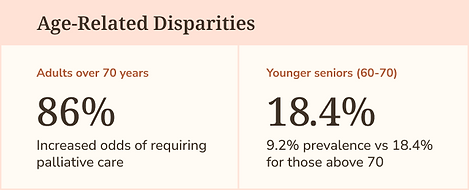

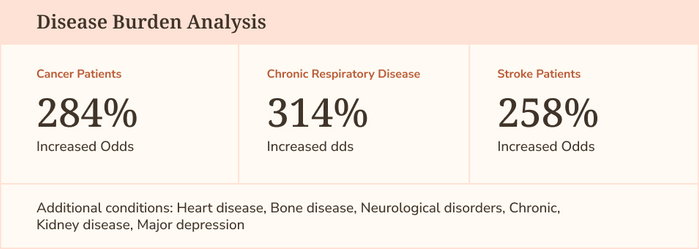
In sum, current estimates suggest that as of 2025, 7–10 million Indians endure serious health-related suffering annually needing palliative support. Unless systemic integration, opioid availability, and workforce training improve, the national need is projected to reach 15 million or more by 2040, a doubling within two decades.
The Solution
Saranam (शरणम्) addresses this urgent gap by developing a replicable, regionally adaptable model, combining medical competence with empathy, modern infrastructure with Indian cultural ethos, and best practices in Palliative Medicine and End of Life care.The demographic and healthcare gap in India represents both a humanitarian imperative and a strategic opportunity to establish a model hospice facility that can:
Build Awareness & Access
Create an integrated care ecosystem that strengthens understanding of, and access to, palliative and end-of-life care across communities.
Deliver Compassionate Care
Address immediate community needs through comprehensive in-patient services and community-centred home-based care.
Enable Training & Research
Function as a learning and research hub to build capacity and advance best practices in palliative care.
This hospice initiative emerged from extensive research and consultation with palliative care physicians, healthcare professionals, and community leaders who recognized the critical gap in palliative and end-of-life care services. As well as from, on the ground experience of having established grassroots, community-centered palliative care services and systems in highly constrained rural and peri-urban settings. The project represents a convergence of medical expertise, philanthropic commitment, and evidence-based planning to address one of India's most pressing healthcare challenges.
